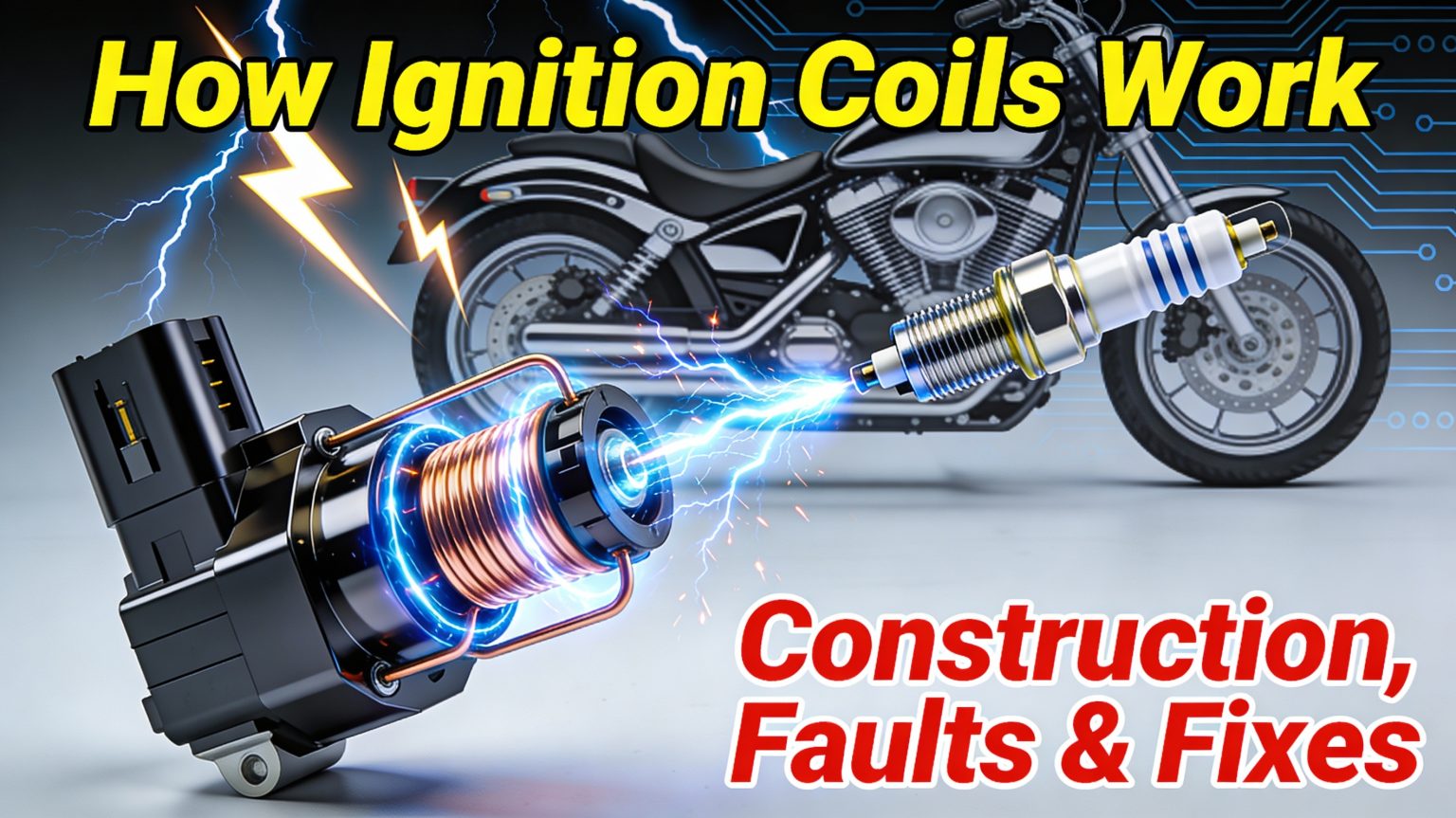
Motorcycle ignition coils power the spark that brings your engine to life, converting low-voltage battery power into the high-energy jolt needed for flawless combustion. This detailed guide explores the essential need for ignition coils, their rugged construction, precise working mechanism, frequent faults, and proven fixes to keep your ride firing on all cylinders.
Why Ignition Coils Are Essential
Ignition coils address the core need in every motorcycle engine: amplifying 12V battery voltage to 20,000-50,000V for spark plugs to ignite the air-fuel mixture. Without this voltage step-up, combustion fails, causing stalls, rough idling, or no-start conditions. They ensure timed sparks for peak power delivery, better fuel economy, and smoother revs across RPM ranges, making them indispensable in CDI, TCI, and ECU-controlled systems.
Detailed Ignition Coil Construction
A motorcycle ignition coil boasts a durable, vibration-proof epoxy or plastic shell housing a ferromagnetic iron core wrapped in two copper windings. The primary winding, with 200-500 thick turns offering 0.4-2 ohms resistance, connects to the ignition module. The secondary winding, featuring 20,000-30,000 fine turns at 8-15k ohms, delivers high-tension output via insulated leads to spark plugs. Compact “coil-on-plug” designs mount directly atop plugs, while traditional canister coils use threaded mounts for easy swaps.
Ignition Coil Working Principle
The magic unfolds through mutual induction: low-voltage current energizes the primary winding, magnetizing the core. A trigger signal from the CDI or ECU abruptly cuts primary power, collapsing the magnetic field. This rapid flux change induces massive voltage in the secondary winding via a 1:100 turns ratio, sending a high-voltage pulse down the HT lead to arc across spark plug electrodes. Timing aligns precisely with piston position for optimal burn, with wasted-spark variants firing on both compression and exhaust strokes.
Common Ignition Coil Faults
Ignition coil failures manifest as intermittent misfires, power loss at high RPM, backfiring, or engine flooding from weak sparks. Heat cycling cracks epoxy housings, increasing internal resistance; moisture corrodes windings, causing shorts; vibration loosens connections, leading to no-spark scenarios. Symptoms worsen in hot climates or after long idles, often mimicking CDI or plug issues in daily commuters and performance bikes alike.
Diagnosis and Quick Fixes
Diagnose with a multimeter: check primary resistance (0.4-2Ω), secondary (8-15kΩ), and insulation continuity. Visual inspections reveal cracks or oil leaks; swap coils between cylinders to isolate faults. Fixes include cleaning corroded terminals, applying dielectric grease, or drying with compressed air. Replace faulty units promptly (budget Rs 400-4,000), regap plugs to spec (0.7-1.1mm), and use heat sinks for track bikes. Preventive maintenance like annual resistance tests prevents breakdowns.